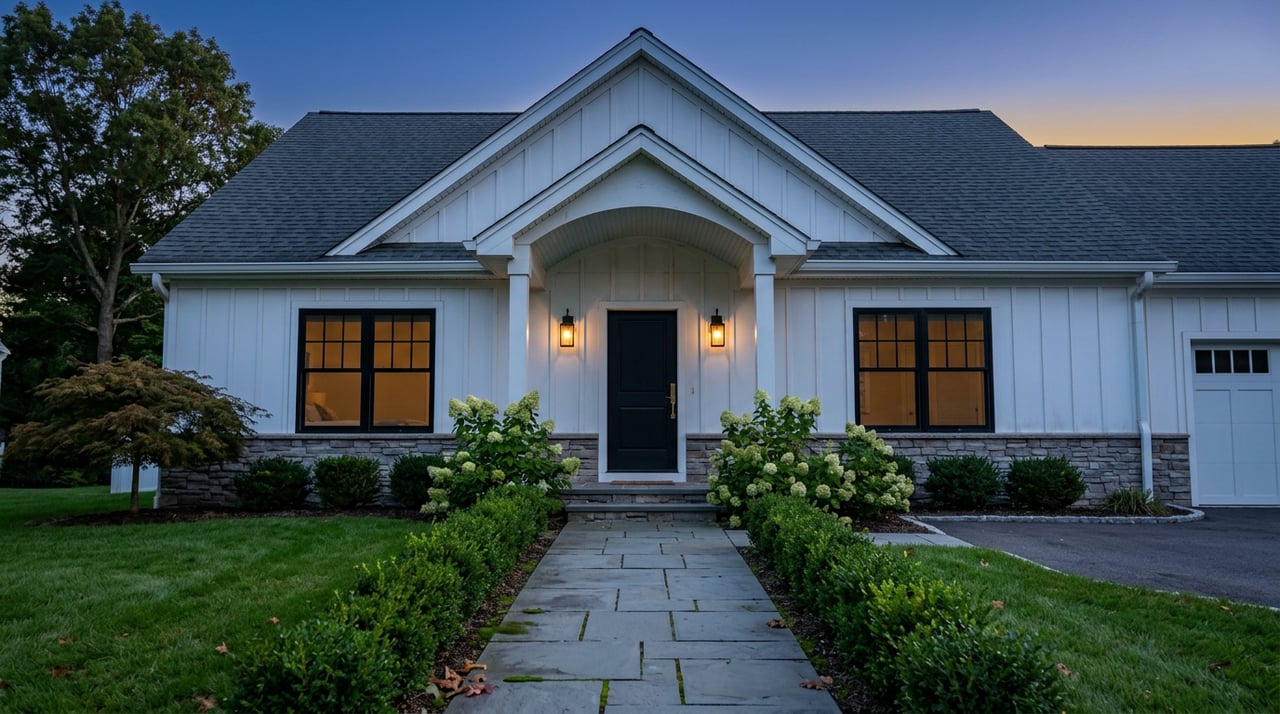
A buyer comparing two colonials, both listed at $450,000, both roughly the same square footage, might reasonably expect the carrying costs to land in the same neighborhood too. In Lehigh County, they often do not. One home near South Whitehall Township could carry an annual tax bill close to $4,800. Another near Slatington, same price, similar size, could run closer to $7,300. Nothing about the house explains the gap. The line on a map does.
That gap matters more right now because the county is moving fast. Homes sold over the three months ending in May 2026 for a median of $365,000, up 4.6 percent from the same period a year earlier, and the typical property in the county was worth about $307,052 as of June 2026, up 4.3 percent year over year. Homes are averaging around nine days on the market. That is not a pace that leaves room for a buyer to sit with a spreadsheet before writing an offer. Which is exactly why it helps to understand the mechanism before you are three showings deep and falling for a house.
The Number on the Assessment Notice Isn't What You Think
Lehigh County did something most Pennsylvania counties have not done in decades: it reassessed every property countywide in 2013, resetting assessed values to that year's market prices. Then it froze them there. Pennsylvania law does not require a reassessment when a home changes hands, so the number attached to a property today still reflects, in most cases, where the market stood over a decade ago, not what a buyer just paid.
That freeze is why the raw millage rate on a tax bill is close to useless for comparison purposes on its own. The state tracks a Common Level Ratio for every county, currently set near 47 percent for Lehigh, which exists specifically to correct for this drift between old assessments and current values. Multiply the millage by that ratio and you get the effective rate: the actual share of a home's real market value that ends up as a tax bill. That is the number worth asking about, not the mills.
The exception worth knowing before you buy: if you pay well above what the Common Level Ratio implies a home should be worth, a school district can file its own appeal and push your assessment up to match. It is not automatic, but it is a real mechanism, and it means an aggressive offer in a hot market can eventually cost more than the extra few thousand dollars at closing.
One School District, Two Different Tax Bills
The clearest proof that raw millage numbers lie sits inside a single school district. Northern Lehigh School District draws students from both Lehigh and Northampton counties, same schools, same superintendent, same per-pupil spending. In April 2026, its board voted 8-1 to advance a proposed 4.8 percent tax increase for the 2026-27 year, setting preliminary millage rates at 26.7255 in Lehigh County and 85.7432 in Northampton County, though directors noted the final rate adopted in June could come in lower. Same district. Same tax dollars raised per student. A number more than three times higher on one side of the county line than the other.
Board President Mathias Green explained why during the vote: the two counties conducted their property assessments at different times, with Lehigh assessed at 100 percent of value and Northampton closer to 50 percent. Once you understand that, the mismatch stops looking strange. Two homes worth the same amount, one in each county, end up paying comparable dollars, even though the millage rate you'd see printed on the bill looks wildly different. It is the exact same trap that makes county-to-county millage comparisons meaningless without correcting for how each county assesses.
The Spread Inside Lehigh County Itself
Even after you correct for that trap, real differences remain, because school districts inside Lehigh County spend and levy at genuinely different rates. Parkland School District, covering South Whitehall Township, currently carries the lowest typical total tax rate among the county's districts, close to 1.07 percent of a home's market value, or roughly $4,818 a year on a $450,000 house. Northern Lehigh sits at the other end, closer to 1.64 percent, or about $7,365 a year on that same $450,000 home. That is a swing of roughly $2,500 a year for houses that could otherwise look identical on paper.
The spread shows up at the municipal level too. Effective tax rates across Lehigh County's towns range from about 2.16 percent in Breinigsville up to 4.05 percent in Catasauqua, nearly double. Median tax bills tell a similar story: Trexlertown's median runs around $2,988, while Kutztown's median lands near $6,499. None of this shows up on a listing sheet. It shows up on the first tax bill after closing.
Southern Lehigh School District, which covers Coopersburg and Upper Saucon Township, is worth a second look on both sides of this equation. Its millage rate sits well below the county's highest districts, and it currently ranks as the top academic performer in the Lehigh Valley on a composite index built from state PSSA, Keystone, and graduation data. A district that scores well and taxes comparatively lightly is not the norm. It is the exception that makes the rest of the spread worth mapping out before you buy.
Why the Cheapest District Today Might Not Stay Cheapest
Parkland's low rate is not guaranteed to hold. In recent years, the district has absorbed enrollment growth tied to new residential construction in South Whitehall Township, including the Ridge Farms development, and has responded with building additions at Parkland High School and Orefield Middle School to keep up with the students those new homes bring. Growth that raises a district's tax base can also raise its costs faster than that base expands, and a board managing new construction, new students, and rising retirement and health care contributions eventually has to raise the millage to cover it. Northern Lehigh's board cited the same underlying pressures, retirement system contributions and health care costs among them, when it proposed its own increase for 2026-27.
None of this means Parkland stops being a comparatively affordable district. It means the gap between the cheapest and most expensive districts in the county is not fixed. A buyer choosing a town partly on today's tax rate should treat that number the way they'd treat a variable mortgage rate: informative for now, but not a promise about five years from now.
What This Means If You're Comparing Towns
If you are weighing two towns at the same price point, the sale price on the listing tells you almost nothing about your future tax bill. The number that matters is the current owner's assessed value, run through the county's Common Level Ratio, and checked against the school district and municipality where the home sits. That math takes a few minutes and can be the difference between two homes that look identical on a listing sheet and two very different monthly payments once escrow is set up.
It is also worth remembering that a low bill today belongs to the current owner's assessment, not automatically to yours. Pennsylvania does not reassess at sale, which is good news for most buyers, since the number typically carries over. The one scenario where it does not is an assessment appeal triggered by a purchase price that runs well above what the Common Level Ratio implies the home should be worth. In a market where homes are averaging nine days on the market and prices are climbing, that scenario is worth asking a lender or agent about before you get into a bidding situation, not after.
A Few Questions Buyers Ask Me About This
Does buying a home in Lehigh County trigger a reassessment? Not automatically. Pennsylvania law does not require a reassessment when a property changes hands, so the existing assessed value typically carries over to the new owner. The exception is when a school district appeals a sale price that implies a market value well above the home's current assessment.
Why do Lehigh County's millage rates look lower than Northampton County's for similar homes? Lehigh County reassessed every property to full market value in 2013, while Northampton County's assessments are set at a lower percentage of current value. A millage rate multiplied against a higher assessment base looks smaller than the same tax burden multiplied against a lower one, which is why comparing raw millage across the two counties without adjusting for assessment ratio leads to the wrong conclusion.
Where can I check the current millage rate for a specific address? Lehigh County's Office of Assessment publishes an annual millage sheet listing county, municipal, and school rates by taxing district, which is the most direct way to confirm the numbers for a specific parcel before making an offer.
If you are weighing towns across Lehigh County and want to know what a specific address is actually going to cost you to hold, not just to buy, that is exactly the kind of question I like to run down before you write an offer. Bernadette Rabel works Lehigh County town by town, tax district by tax district, so let's connect and figure out what your budget really buys.